10. The Double-Bin Nesting System
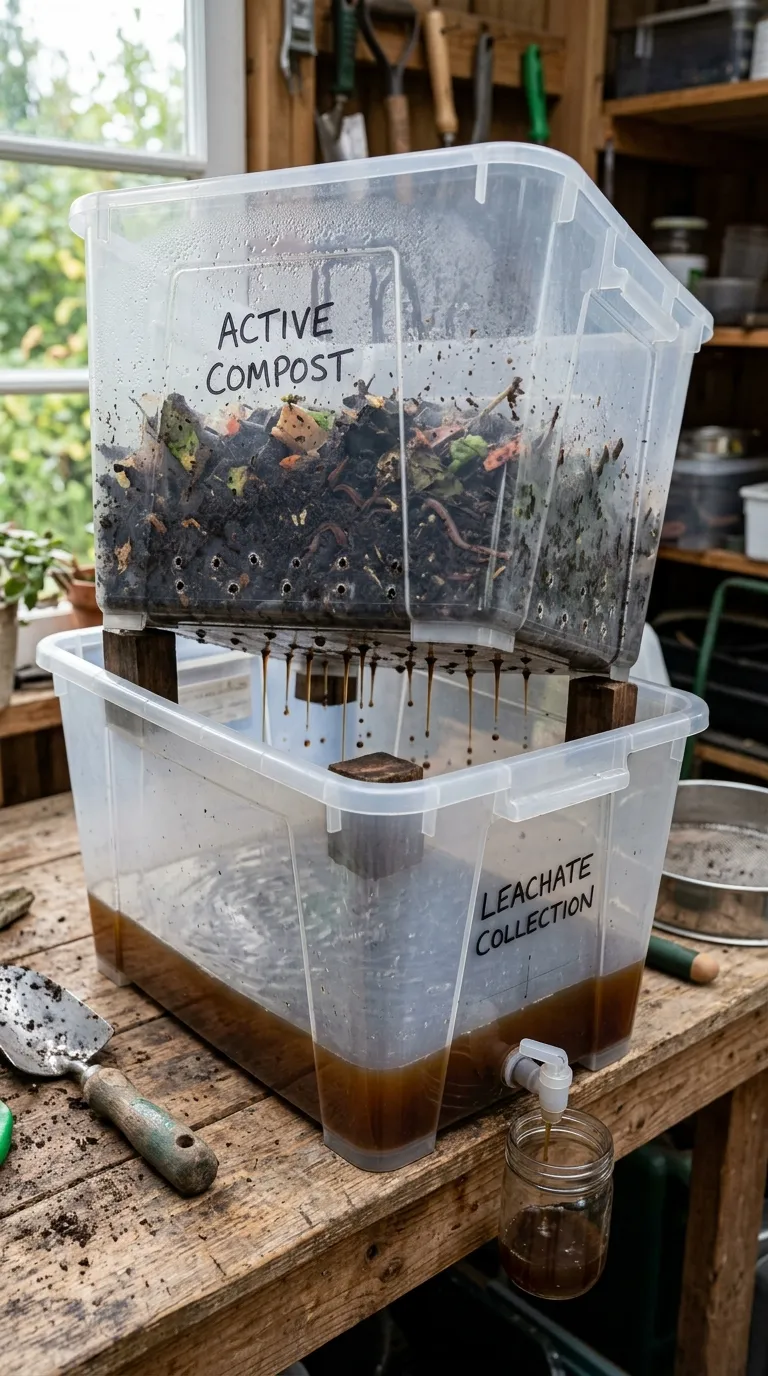
One of the challenges of countertop composting is managing the liquid that naturally drains from fresh food scraps. Excess moisture accelerates decomposition and creates unpleasant, anaerobic odors. A nesting double-bin system solves this problem by separating the solid scraps from the liquid runoff, keeping your compost drier and fresher for longer.
To build this system, find two plastic containers of the identical size that nest neatly inside one another. In the bottom of the inner container, drill several small drainage holes. Place a few small plastic spacers, such as bottle caps, in the bottom of the outer container, then nest the drilled container inside it. When you add food scraps to the inner bin, any excess liquid will drain through the holes into the reservoir below, keeping the scraps aerated. Cover the top bin with a ventilated, filter-equipped lid, and simply pour out the liquid reservoir every couple of days.
Conclusion
Implementing a DIY countertop compost bin is a simple, rewarding project that supports a sustainable lifestyle while keeping your kitchen organized and odor-free. Whether you choose the sleek look of an upcycled stainless steel canister, the rustic charm of a Mason jar, or the clever space-saving design of a cabinet-mounted bin, these ideas prove that eco-friendly living does not require expensive, store-bought gadgets. By choosing materials that suit your kitchen’s style and ensuring proper ventilation and filtration, you can easily turn daily food waste management into an effortless, stylish habit. Start building your DIY bin today and take a meaningful step toward a greener home.