There is nothing quite like the experience of plucking fresh, aromatic herbs right from your kitchen windowsill to elevate your home cooking. Whether you are adding sweet basil to a homemade marinara sauce, tossing fresh cilantro into a vibrant salsa, or steeping mint leaves for a relaxing afternoon tea, having an indoor herb garden makes culinary creativity effortless. For urban dwellers, apartment renters, or anyone with limited outdoor yard space, utilizing bright windowsills is the ultimate way to bring nature indoors. It is a practical, space-saving solution that infuses your living space with life, color, and incredible fragrances.
Among the endless options for indoor planters, the classic glass mason jar remains an undisputed favorite. Originally designed for home canning, these durable, inexpensive, and highly aesthetic glass vessels are perfect for DIY gardening projects. Their transparent walls allow you to monitor root growth and soil moisture levels easily, while their rustic charm complements almost any interior design style, from modern farmhouse to minimalist industrial. In this comprehensive guide, we will explore ten creative, step-by-step DIY mason jar herb garden ideas specifically tailored for your windowsills, complete with practical tips to ensure your indoor plants thrive year-round.
1. Classic Chalkboard Label Mason Jars
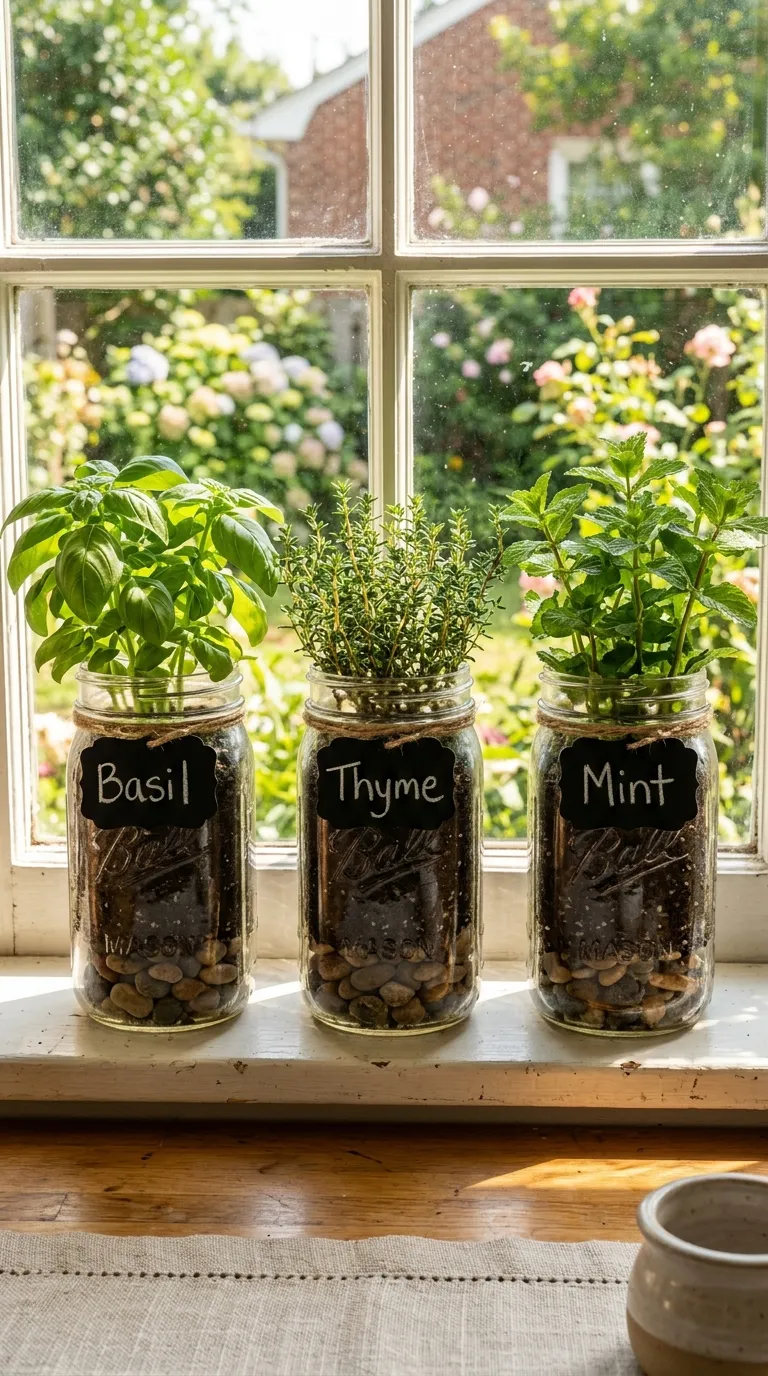
The classic chalkboard label mason jar garden is a timeless favorite for kitchen windowsills because it perfectly balances vintage aesthetics with everyday functionality. This project is ideal for beginners who want an organized, clean look that allows them to easily identify their growing herbs. By applying a small patch of chalkboard paint or a pre-cut adhesive chalkboard sticker to the front of each jar, you create a customizable surface where you can write the names of your herbs, planting dates, or watering reminders using liquid chalk markers.
To build this setup, start with wide-mouth quart-sized mason jars, which provide ample room for root development. Because glass jars lack bottom drainage holes, you must establish a proper drainage layer. Pour one to two inches of small river stones, pea gravel, or horticultural charcoal at the very bottom of each jar before adding your high-quality organic potting soil. This layer acts as a reservoir, keeping the delicate roots of your rosemary, thyme, or oregano from sitting directly in stagnant water, which can cause root rot. Place these jars on a sunny south-facing windowsill where they can receive at least six hours of direct sunlight daily, and enjoy the rustic, organized charm they bring to your kitchen.