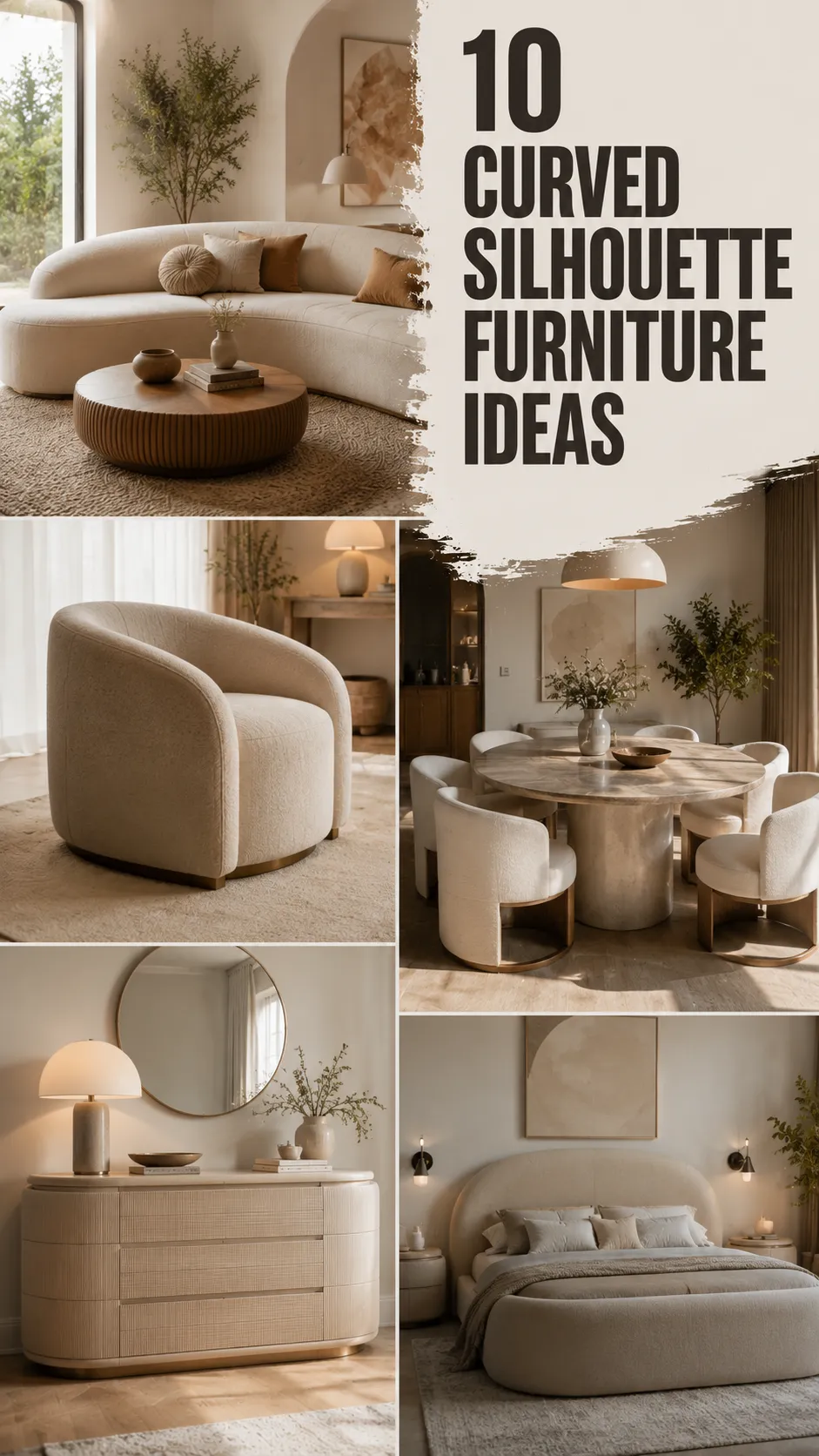
In the world of interior design, we are currently witnessing a collective move away from the rigid, sharp-edged minimalism that dominated the last decade. There is a renewed craving for comfort, fluidity, and a sense of organic movement—an aesthetic philosophy often referred to as “soft modernism.” At the heart of this shift is the curved silhouette.
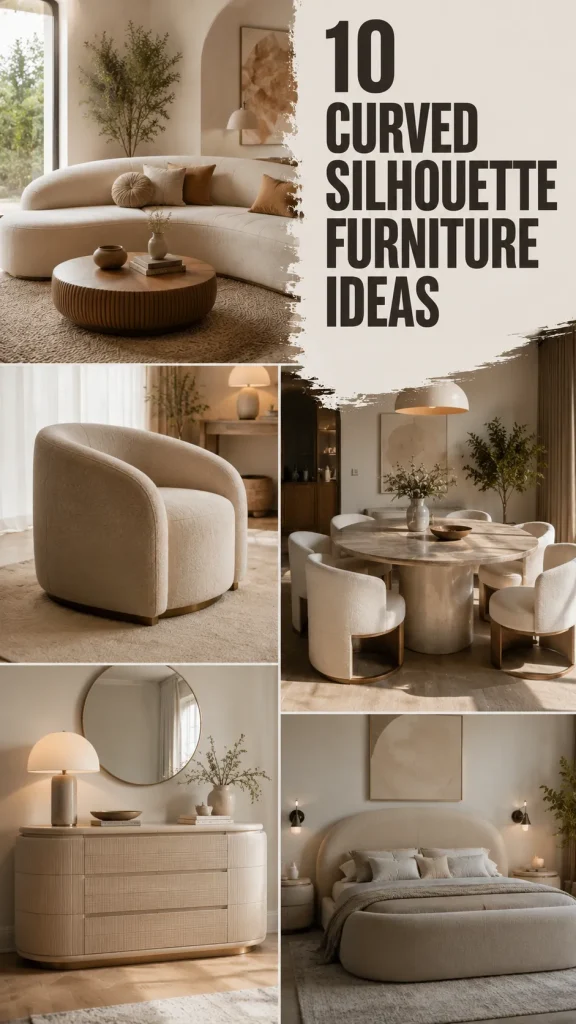
Curved furniture—defined by rounded edges, kidney-shaped profiles, and arched forms—does more than just look beautiful; it changes the way we move through a room. It breaks the monotony of rectangular architecture, guides the eye in a continuous, rhythmic motion, and introduces an inherent sense of calm and safety. By incorporating rounded forms, you transform a space from a series of static zones into a cohesive, flowing sanctuary.
Here are ten curved silhouette furniture ideas to help you embrace this softened aesthetic.
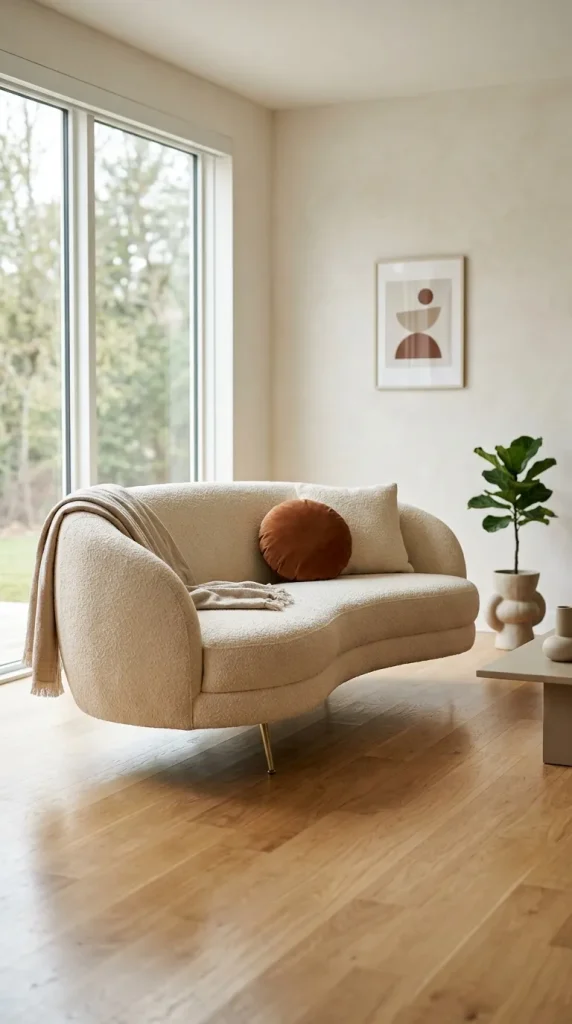
1. The Kidney-Shaped Sofa
The kidney-shaped sofa is the ultimate statement piece for a living room. Unlike the traditional “L” or linear sofa, the curved silhouette of a kidney shape encourages social interaction, as everyone is angled slightly toward the center of the room.
- Design Note: Place this piece floating in the center of the room, rather than against a wall, to allow the curve to breathe and function as the primary anchor.
- The Vibe: Mid-century sophistication mixed with modern, high-comfort lounging.
2. The Arched Floor Mirror
Nothing opens up a space quite like an arched mirror. By rounding the top of a traditional rectangular mirror, you instantly soften the “boxiness” of a room.
- Design Note: Use a floor-standing arched mirror in an entryway or bedroom. It mimics the shape of a doorway, tricking the eye into perceiving more depth and height.
- The Vibe: Romantic, classical, and elegant. It adds a touch of architectural “architecture” to otherwise plain walls.

3. Rounded “Bouclé” Accent Chairs
Texture and shape go hand-in-hand. A chair with a rounded back, upholstered in tactile bouclé or shearling, creates a visual “nest” that invites you to sit down.
- Design Note: Opt for chairs with completely rounded, barrel-style backs. The absence of sharp corners makes these pieces feel smaller and less imposing, even if they have a generous seat.
- The Vibe: Cozy, tactile, and highly modern. These pieces feel like sculptures that happen to be functional.

4. The Organic-Form Coffee Table
The coffee table is often the most rectangular element in a living room. Swapping it for an organic, blob-shaped, or circular piece immediately changes the flow of the room.
- Design Note: Look for “pebble” or “serpentine” shaped tables. They are safer for high-traffic areas (no sharp corners to bump into) and provide a nice contrast to a linear sofa.
- The Vibe: Fluid and playful. It makes the living room feel less formal and more approachable.

5. The Barrel-Back Dining Chair
Dining chairs can often feel like a “fence” around a table. By choosing barrel-back chairs, you provide more comfort for the diner and a more rounded, rhythmic look to the dining area.
- Design Note: The curved back wraps around the body, offering lumbar support while maintaining a lower profile that keeps the table area feeling open and uncluttered.
- The Vibe: Intimate and restaurant-quality luxury. It turns the dining table into a cozy circle of conversation.

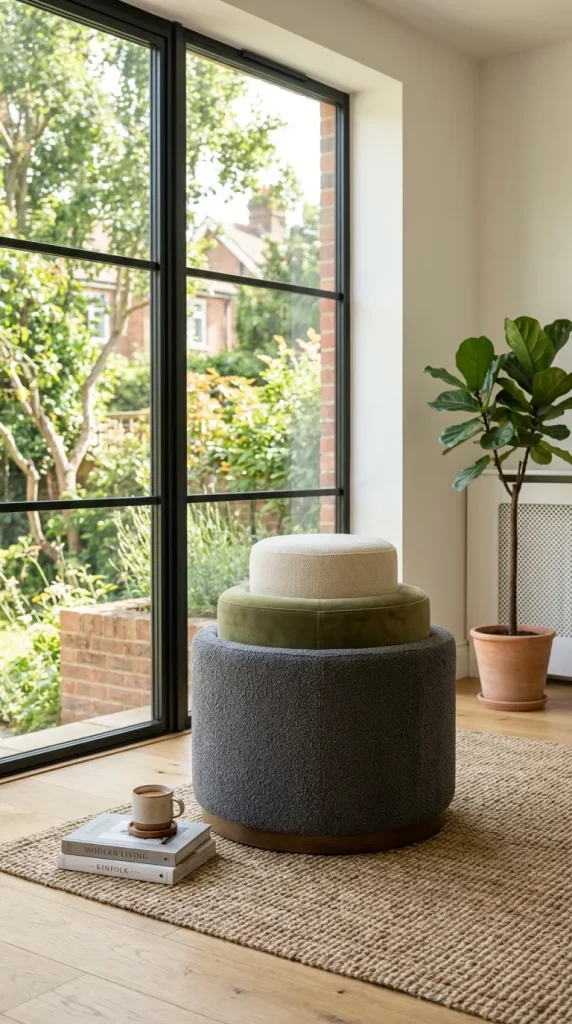
6. The Circular Nesting Ottoman
Ottomans are the most flexible furniture items in a home. When shaped as perfect circles or soft “ovals,” they can be tucked away or pulled out as extra seating.
- Design Note: Use a trio of nesting circular ottomans. When not in use, they act as a single piece of decor; when guests arrive, they separate to provide multiple seating spots.
- The Vibe: Practical and modular. It’s a space-saving solution that values aesthetics as much as utility.
7. Curved-Front Credenza
Storage furniture is traditionally blocky and heavy. A credenza with a bowed or curved front face creates a much lighter visual footprint.
- Design Note: The curve makes the furniture feel less “dense,” allowing it to occupy a hallway or narrow wall without making the space feel crowded.
- The Vibe: Elegant and fluid. It transforms a standard storage piece into a graceful addition to the room’s architecture.

8. The Arch-Top Bookcase
Move away from the standard square bookshelf by integrating shelving with arched tops.
- Design Note: This is an excellent choice for a dedicated home office or library. The arch adds a sense of “built-in” character and grandeur, even if the bookcase is free-standing.
- The Vibe: Intellectual and timeless. It softens the visual impact of a large wall of books.

9. Rounded Bed Frame and Headboard
The bedroom is the most logical place for curved forms, as they naturally encourage relaxation. A bed frame with a rounded, upholstered headboard creates a softer frame for your sleep space.
- Design Note: Choose a headboard that wraps slightly around the sides of the bed, creating a “cradle” effect.
- The Vibe: Safe, serene, and luxurious. It turns the bed into a dedicated “haven” rather than just a place to sleep.

10. The Pedestal Round Dining Table
If you have a compact dining area, a round table is far more efficient than a square one. When paired with a single, rounded pedestal base, the table becomes a piece of art.
- Design Note: The pedestal base is crucial here—it eliminates chair-leg “clutter,” allowing for more comfortable movement around the table.
- The Vibe: Harmonious and communal. A round table has no “head,” which promotes a more democratic and relaxed atmosphere for meals.

Why Curves Matter: The Psychology of Softness
Research in environmental psychology suggests that humans have an innate preference for curved shapes over sharp, angular ones. Angular forms are often associated with threat (as in nature, sharp things are often dangerous), while curved forms are associated with safety and nurture. By softening your home, you aren’t just following a trend; you are actively creating a space that feels more welcoming and less stressful on a subconscious level.


